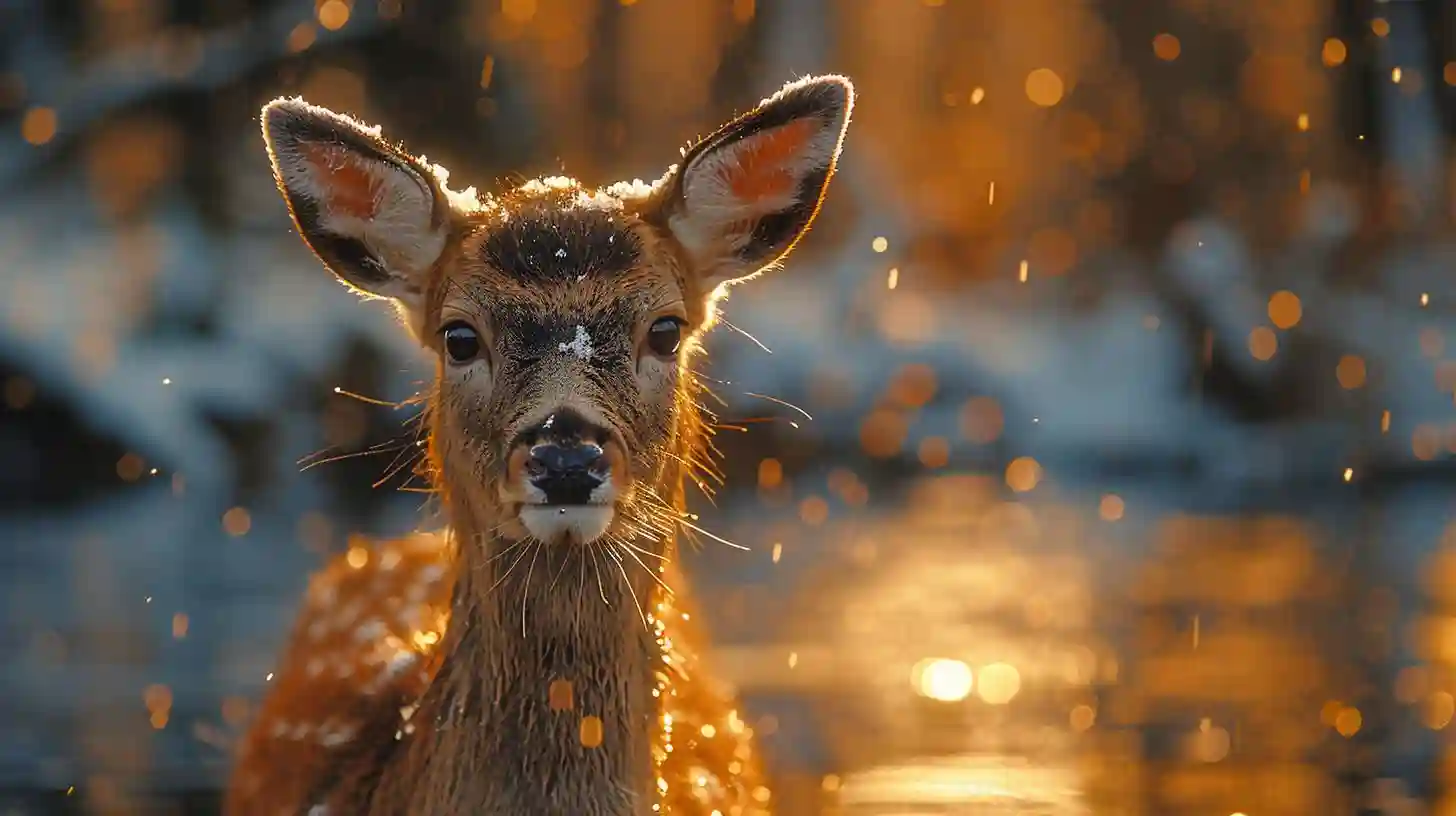
Deer are among the most resilient creatures, capable of surviving some of the harshest winter conditions. Their ability to navigate through extreme cold, heavy snow, and scarce food supplies provides valuable insights into both nature’s adaptability and potential lessons for human survival. One of the key strategies deer employ is their thick fur, which serves as an insulating layer, trapping air close to the skin and creating a barrier against the cold. This fur, combined with the deer’s ability to adjust their metabolic rate, allows them to conserve energy during times when food is limited and the cold is overwhelming.
Moreover, deer have evolved a unique way of moving through deep snow. Their hooves act as natural snowshoes, distributing their weight and preventing them from sinking too deeply into the snow. This adaptation helps them travel greater distances in search of food, even when conditions are extreme. Their keen sense of smell also guides them to areas where food is more likely to be found, such as areas with dense vegetation or where the snow cover is thinner.
What we can learn from these behaviors is the importance of energy conservation and efficient movement in the face of adversity. Like deer, humans can benefit from being mindful of how they conserve resources in harsh conditions. The deer’s ability to adapt its physical capabilities to the environment highlights the critical role of environmental awareness in survival. It’s a reminder that survival is not just about enduring, but also about adjusting to and working with the challenges presented by nature.