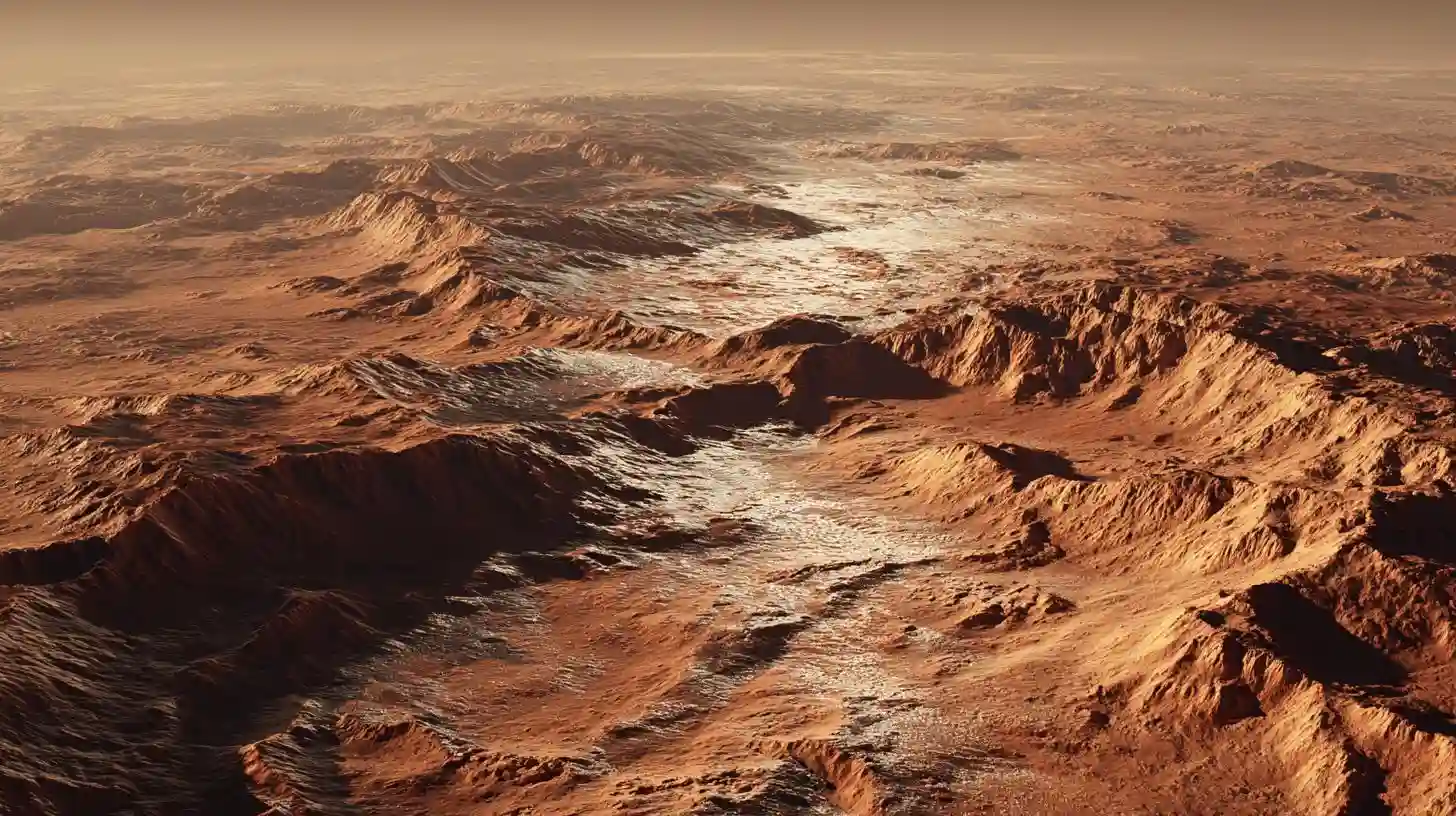
The possibility of water on Mars has long intrigued scientists, raising questions about how this vital resource could exist on a planet with extreme temperatures, low atmospheric pressure, and high radiation levels. Mars’ thin atmosphere, composed mostly of carbon dioxide, exerts less than one percent of Earth’s atmospheric pressure, making it difficult for liquid water to remain stable on the surface. Under such conditions, water is prone to quickly evaporate or freeze. However, certain scientific observations suggest that water may persist in specialized forms or under specific environmental conditions. One key factor is the presence of salts, particularly perchlorates, which are capable of lowering the freezing point of water. These compounds could allow briny solutions to remain liquid at temperatures far below the normal freezing point of pure water, creating transient liquid flows during warmer periods or within subsurface environments where temperatures are more stable. Evidence from orbiters and rovers indicates recurring slope lineae, dark streaks on Martian slopes that appear seasonally and may be associated with briny liquid flows. These features suggest that water in its briny state could be mobilized under current Martian conditions, even if it does not exist as pure liquid for long periods. Subsurface ice is another crucial component in understanding water on Mars. Large deposits of water ice have been detected beneath the surface at mid-latitudes and near the poles. Thermal models indicate that heat from solar radiation, combined with insulating layers of regolith, could allow some of this ice to melt temporarily, creating pockets of liquid water that may support microbial life if other conditions are favorable. Additionally, underground aquifers could persist in regions shielded from extreme surface conditions, further increasing the chances of liquid water. Seasonal temperature fluctuations, interactions between ice, salts, and regolith, and the presence of localized geothermal heat sources all contribute to a complex system where water could exist in forms that are both transient and hidden. While Mars presents a harsh environment, these mechanisms collectively demonstrate that water is not entirely absent, but rather exists in ways that are unique to the planet’s extreme conditions, providing a tantalizing glimpse into its potential habitability.