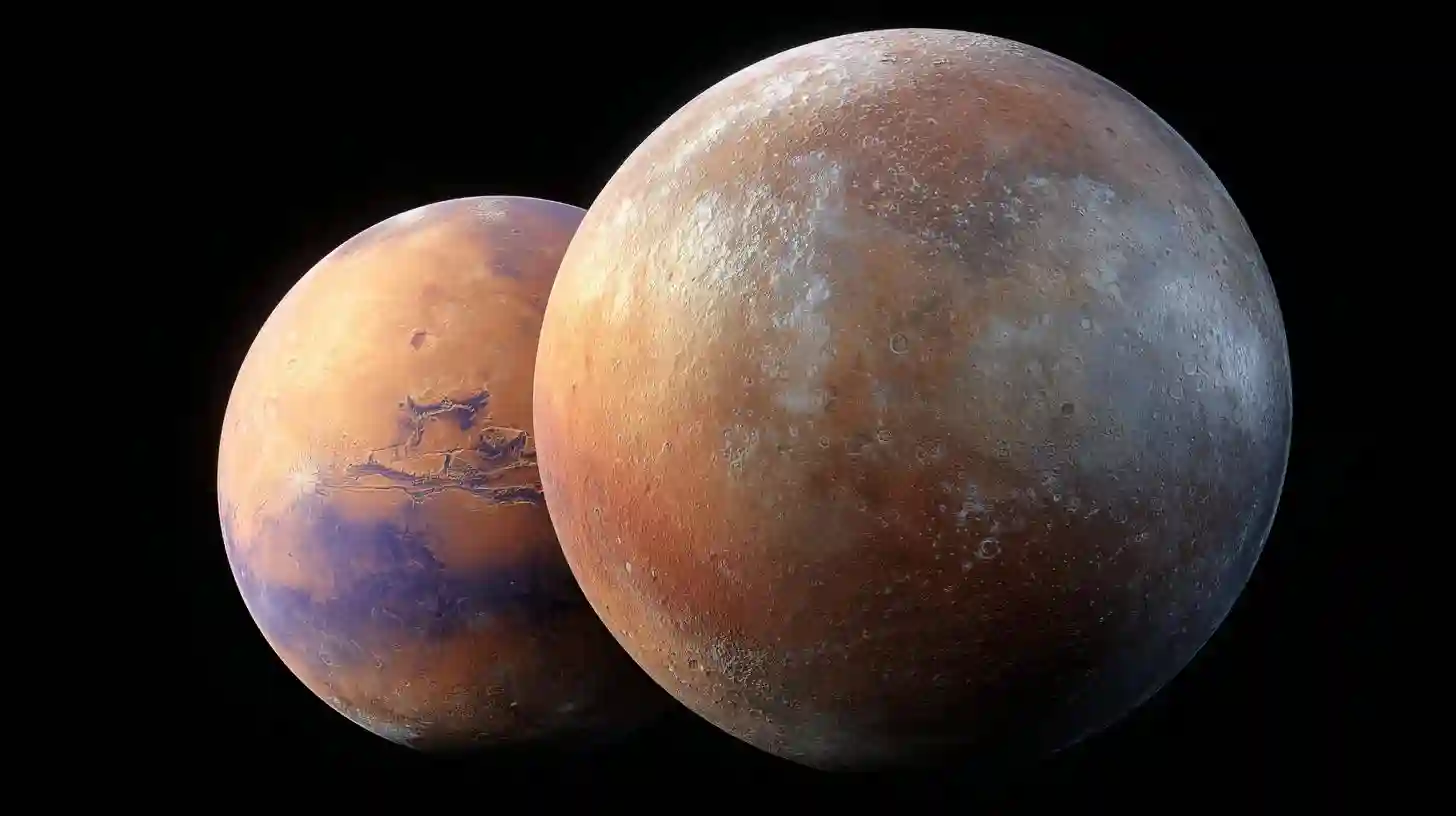
Water on Mars has fascinated scientists for decades, especially as evidence continues to mount that liquid water may exist intermittently on the planet’s surface or subsurface. Unlike Earth, where water covers the majority of the planet in oceans, rivers, and lakes, Mars’ water is mostly trapped in polar ice caps, underground reservoirs, and potentially transient briny flows. The Martian atmosphere is thin and cold, which makes stable liquid water rare, yet seasonal streaks known as recurring slope lineae suggest that salty water may flow briefly during warmer months. Comparatively, the presence of water on other planets and moons offers a stark contrast in both quantity and behavior. On Europa, one of Jupiter’s moons, a thick ice crust overlays a global subsurface ocean that is believed to be in contact with a rocky mantle, creating conditions that could allow complex chemical interactions. Europa’s water is almost entirely hidden beneath ice, unlike Mars where surface features occasionally reveal its presence. Similarly, Enceladus, a moon of Saturn, ejects plumes of water vapor and ice particles through cracks in its icy shell, indicating an active liquid ocean beneath the surface, which contrasts with the sporadic and limited flows on Mars. Venus presents a different scenario, where extreme surface temperatures and atmospheric pressure prevent liquid water from existing, although ancient studies suggest that water may have once covered the planet. Unlike these distant moons and planets, Earth remains unique for its abundant, stable liquid water, maintained by a thick atmosphere, moderate temperatures, and a robust hydrological cycle that recycles water across oceans, rivers, glaciers, and the atmosphere. Titan, Saturn’s largest moon, contains lakes and rivers not of water but of liquid hydrocarbons, providing an intriguing comparison as it demonstrates how planetary environments can support liquid substances other than water. Mars’ water is less dynamic than that of icy moons like Europa or Enceladus but more accessible to future exploration than the hidden oceans of those moons, highlighting the variety in planetary water distribution. Studying the differences between Mars and these celestial bodies enhances understanding of planetary evolution, potential habitability, and the role of water in shaping surface and subsurface environments across the solar system, revealing both the similarities and contrasts that make each location unique.