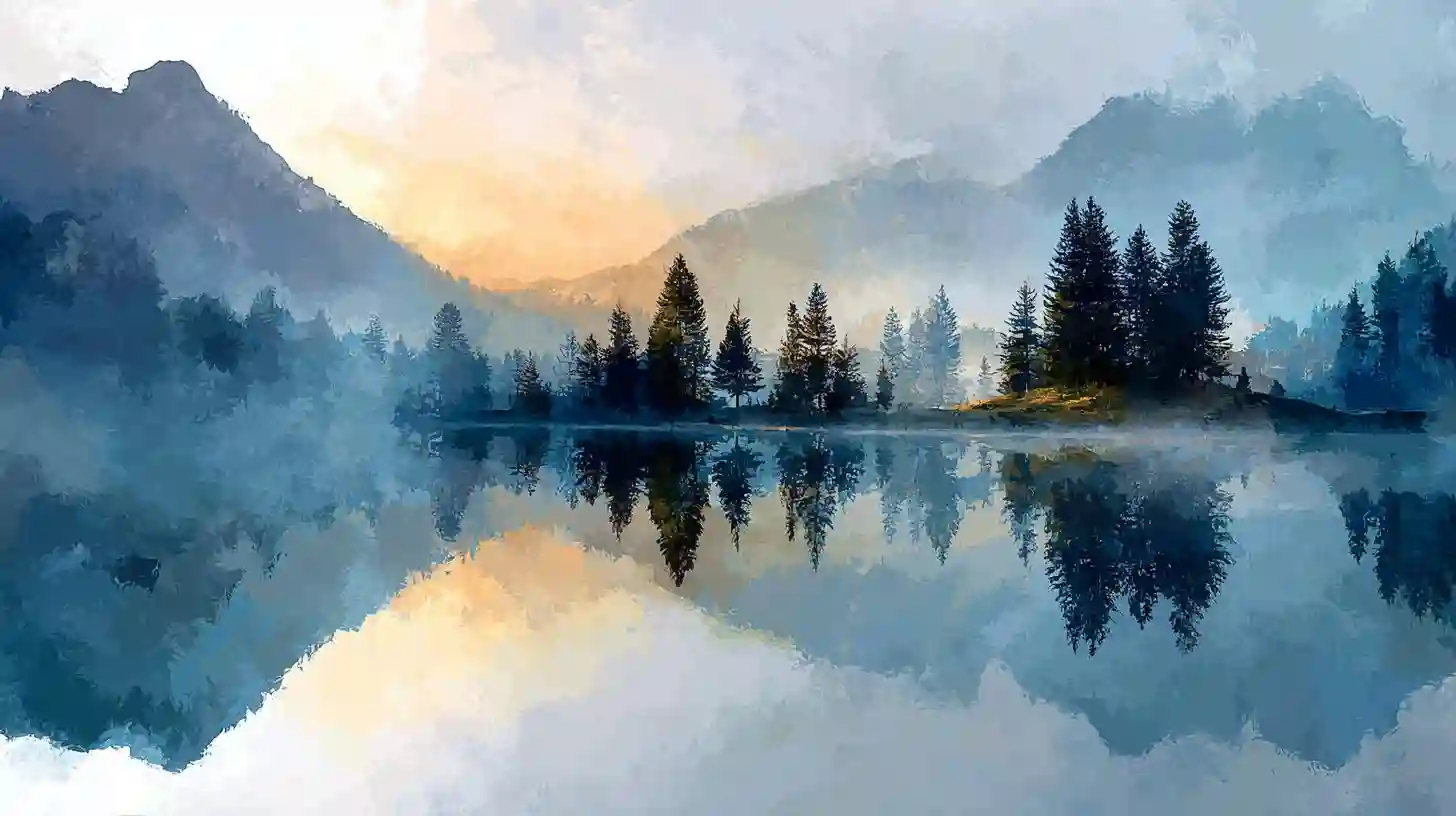
Watercolor reflections in water landscapes are a beautiful and challenging aspect of painting. The delicate nature of watercolors combined with the fluid movement of water requires a thoughtful approach to capture the natural essence of reflections. Mastering this art involves understanding how light, color, and texture interact on the water's surface. To begin, it's crucial to grasp the basic principle that reflections are not exact replicas of the objects they mirror but are influenced by the movement of water and the angle of light. This means that the reflection should be somewhat abstract, with blurred lines and softer edges.
When painting water, it’s important to focus on the direction of the water's movement, whether it's still, rippling, or flowing. A calm lake or pond will have smooth, defined reflections, while a river or ocean will create distorted, fragmented images. The play of light is another key factor. The sun or any light source will create highlights on the water, with reflections often appearing lighter than the original objects. To achieve this effect, wetting the paper first and allowing colors to flow together can create the soft transitions of light and shadow, making the reflection feel natural.
Choosing the right color palette is also essential. Since water often reflects the sky and surrounding environment, shades of blue, green, and brown are common. However, the color of the reflection will depend on the time of day, the weather, and the surrounding elements. A sunset may cast warm oranges and reds on the water, while an overcast sky may give the reflections a cooler, muted tone. The intensity of the reflection depends on the transparency of the water, with deeper waters creating darker, more pronounced reflections, while shallow waters offer lighter, more subtle images.
Texture plays a significant role in creating realistic reflections. The surface of the water is rarely completely smooth. Subtle ripples or waves distort the reflection, which can be portrayed by using light brushstrokes and varying the pressure on the brush. These slight distortions help create a sense of movement and depth. To capture this, use a dry brush technique or employ the lifting method to remove pigment in areas where the water moves, allowing the paper to show through.
Achieving the perfect balance of these elements requires patience and practice. Allowing the watercolors to flow naturally and experimenting with different techniques will help develop the skills necessary to master reflections.