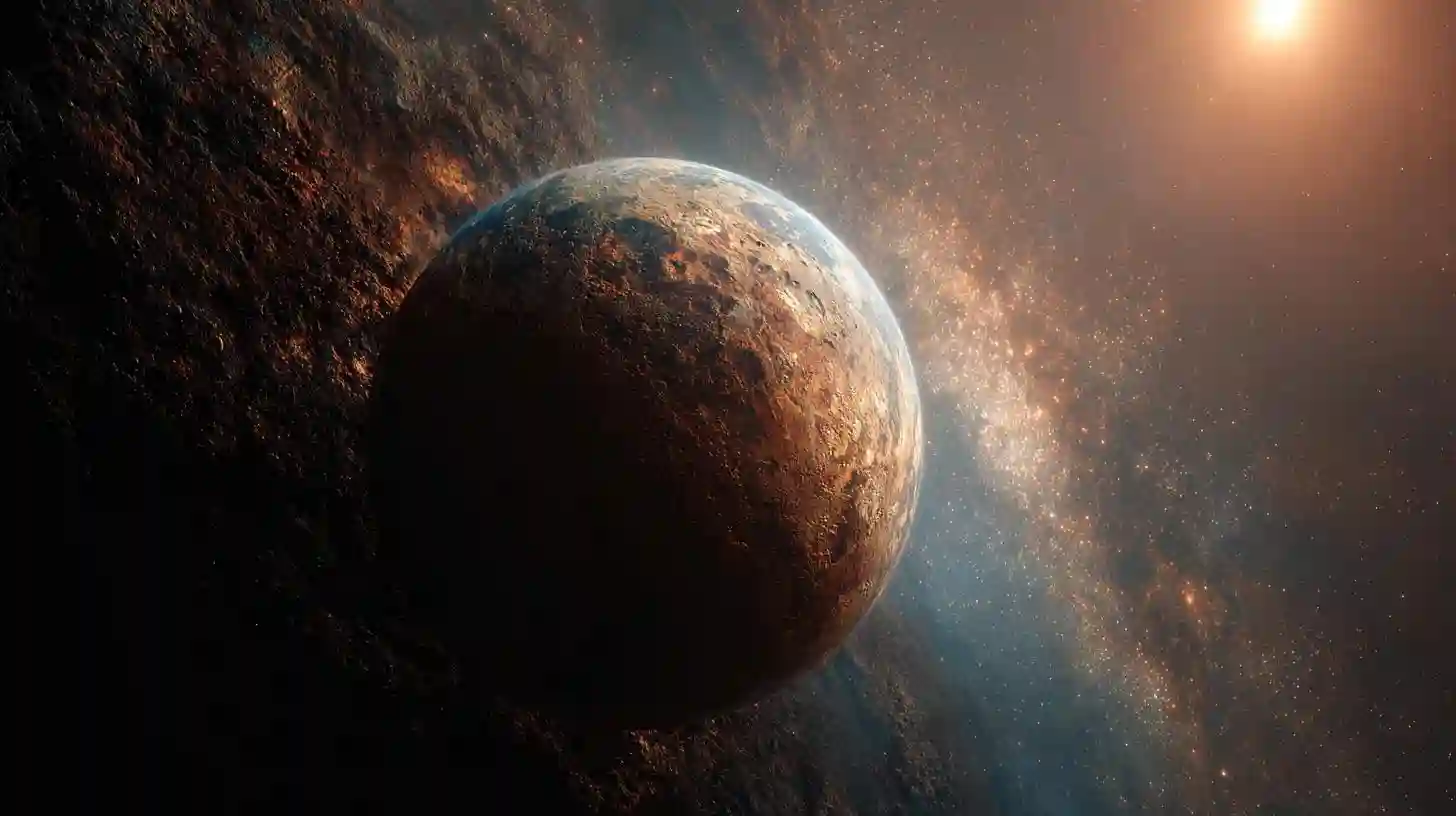
The search for extraterrestrial life has long been a subject of fascination and debate among scientists, philosophers, and the public. As technology and exploration capabilities have advanced, the pursuit of this age-old question has moved from the realm of science fiction into the domain of scientific inquiry. Recent discoveries have only intensified this quest, offering new insights into the potential for life beyond Earth.
One of the most significant breakthroughs in recent years has been the discovery of exoplanets, planets that orbit stars outside our solar system. Advances in telescopes and observation techniques have allowed scientists to detect thousands of these exoplanets, some of which lie in the so-called habitable zone of their stars. These planets are situated at distances where liquid water, a crucial ingredient for life as we know it, could exist on their surfaces. The detection of these exoplanets has spurred new theories on how life could arise and survive under different conditions than those found on Earth.
In addition to exoplanet discoveries, research into the moons of our own solar system has opened up exciting possibilities for extraterrestrial life. For instance, moons like Europa, Enceladus, and Titan have been identified as having subsurface oceans beneath their icy crusts. These environments could harbor microbial life, and missions to these moons are planned in the coming decades to search for signs of life. Scientists speculate that the chemical ingredients needed for life might exist in these hidden oceans, and the search for microbial life there could reveal whether we are truly alone in the universe.
Astrobiologists are also examining more extreme environments on Earth to better understand how life might survive in hostile conditions. These "extremophiles" thrive in environments with high radiation, extreme heat, or lack of oxygen. Studying how these organisms adapt and survive could provide important clues about the types of life forms that could exist on distant planets or moons with similarly harsh conditions. The discovery of these resilient organisms on Earth suggests that life might not require the specific conditions we are accustomed to but could thrive in environments vastly different from our own.
These findings are not just adding pieces to a cosmic puzzle; they are reshaping our understanding of biology and the potential for life in the universe. They also raise profound questions about humanity's place in the cosmos. As we continue to explore the stars and study the environments of distant planets and moons, the possibility of encountering extraterrestrial life becomes ever more plausible. The discoveries thus far are just the beginning, and as our methods of exploration and observation continue to improve, it is likely that we will uncover even more evidence that could ultimately answer the question that has intrigued humankind for centuries.