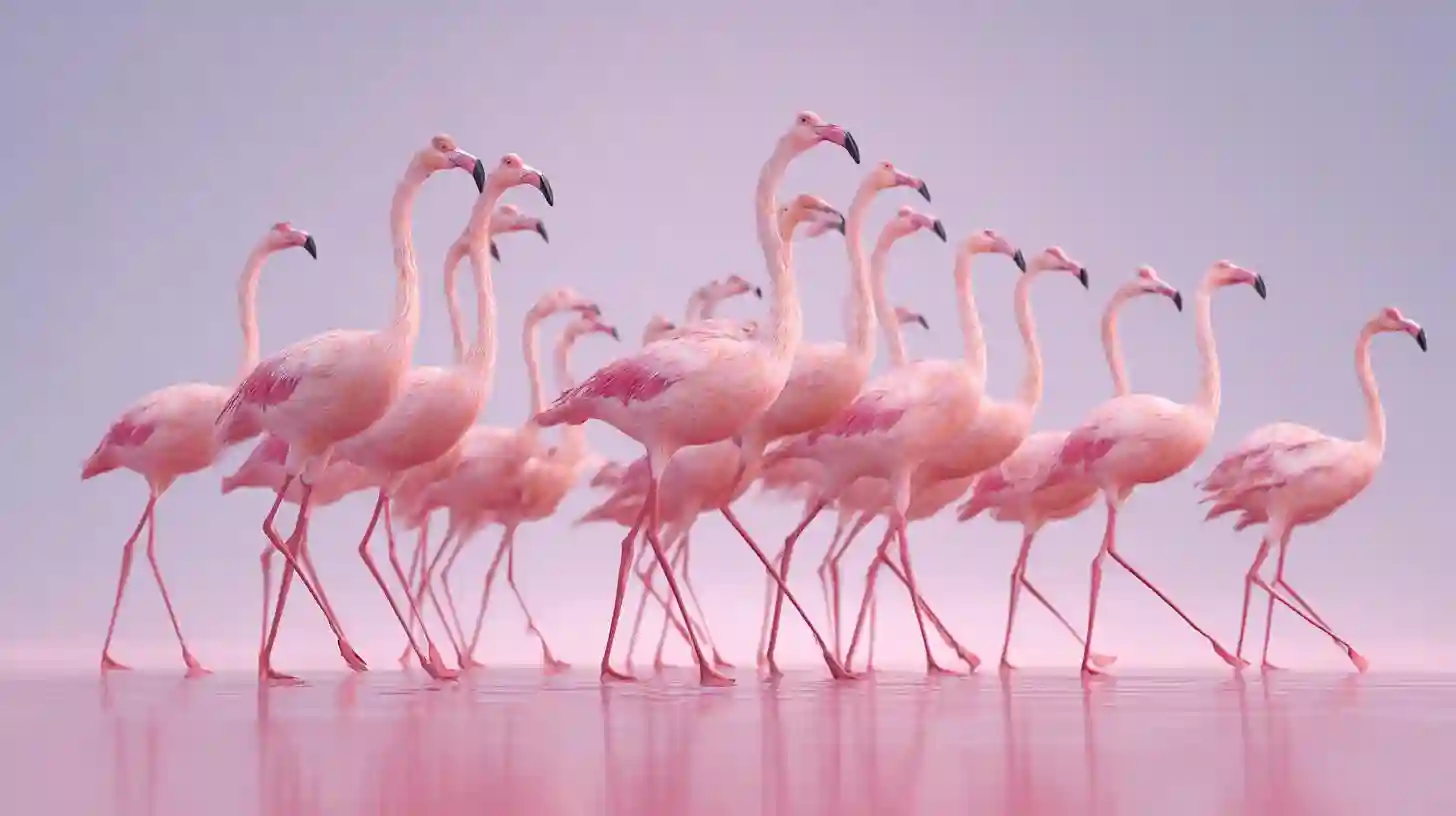
Flamingos are famous for their unique one-legged posture, which has long intrigued both biologists and engineers. This remarkable stance is not only a display of the bird’s grace but also an example of evolutionary efficiency. The mechanics behind how flamingos maintain balance on one leg without expending much energy has captured the imagination of researchers, leading to questions about whether this posture could be replicated in robotics or prosthetics. The idea of creating a device that mimics this delicate balance raises many challenges, as it involves complex biomechanical principles and requires a deep understanding of the forces involved.
One of the key aspects of a flamingo's ability to stand on one leg for extended periods is its specialized anatomy. The bird’s leg has a locking mechanism that allows it to rest without exerting muscle tension. This feature minimizes the amount of energy the flamingo expends while maintaining its stance. In contrast, humans, even with prosthetics or robotics, generally need to engage muscles or use mechanical systems to maintain balance, making it more energy-intensive.
In robotics, achieving a similar one-legged posture would require advancements in artificial balance mechanisms. Robots rely on sensors, motors, and algorithms to adjust their stance continuously, but replicating the static energy efficiency of a flamingo presents unique challenges. Most current robots are designed with two legs for stability, and their one-legged capabilities are generally temporary, such as during a brief maneuver or jump.
For prosthetics, the challenge is different but equally complex. Prosthetic legs are typically designed for functionality and mobility, ensuring that users can walk, run, and perform everyday tasks. To create a prosthesis that enables the user to stand on one leg effortlessly would require significant innovation in terms of joint mechanics, material design, and weight distribution. The locking mechanism found in flamingos might inspire new prosthetic designs, but it would need to be adaptable to the human body’s dynamic movements and ever-changing forces.
Both robotics and prosthetics are advancing rapidly, and the quest to mimic the flamingo’s one-legged posture could open new possibilities in both fields. As technology continues to evolve, it is conceivable that we may one day see devices that can replicate the elegance and efficiency of a flamingo’s unique stance, blending nature's brilliance with cutting-edge engineering. However, achieving this goal will require a deeper understanding of biological systems and the development of advanced, energy-efficient technologies.