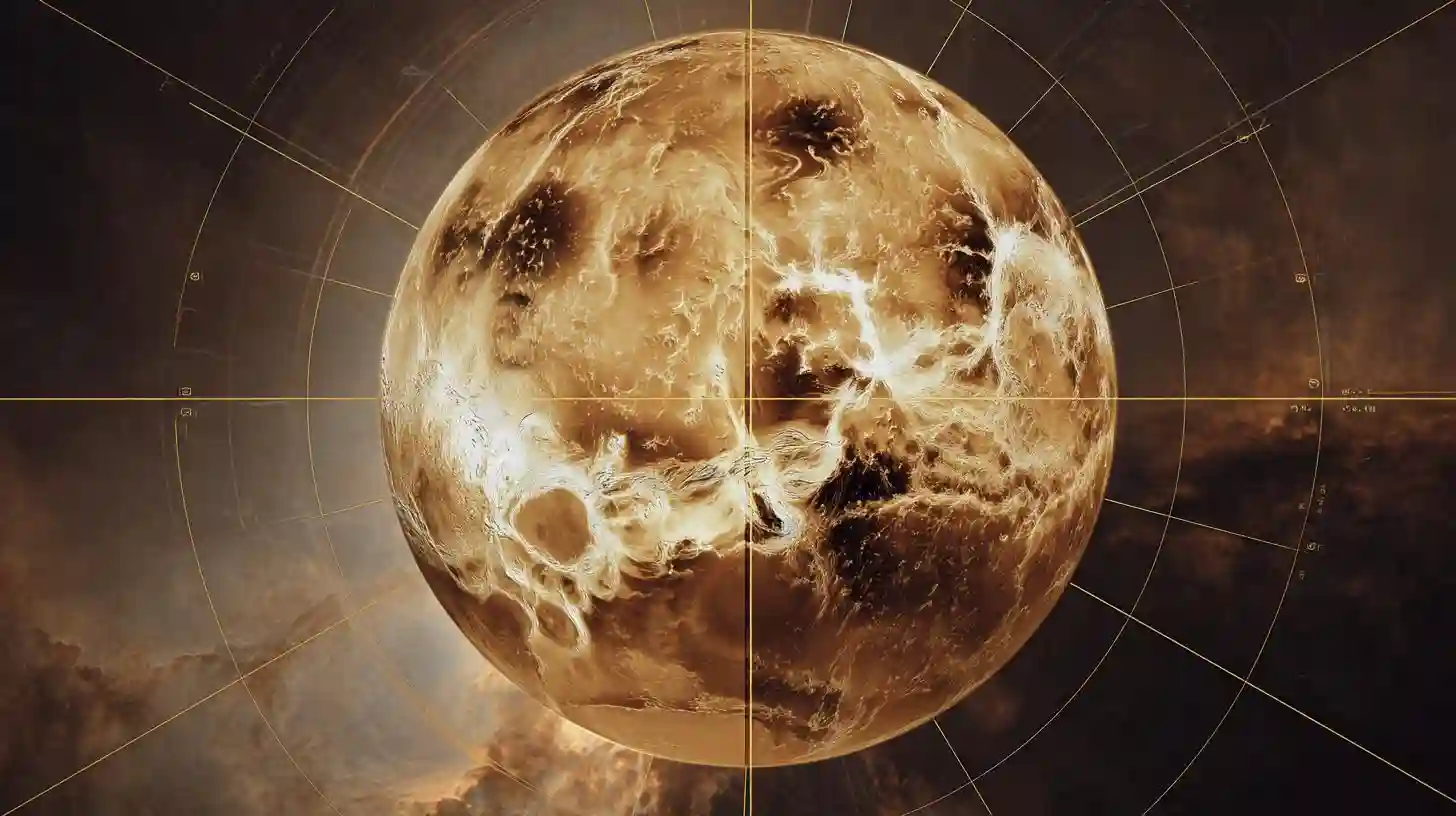
The concept of time on Venus differs significantly from that on Earth due to the planet's unique rotational and orbital characteristics. A day on Venus, known as a rotation period, is the time it takes for the planet to complete one full rotation on its axis. Venus takes longer to rotate once on its axis than it does to orbit the Sun. As a result, a single day on Venus is much longer than a Venusian year. In fact, Venus rotates very slowly in the opposite direction to most planets in the solar system, including Earth. This retrograde rotation means that if you were standing on the surface of Venus, the Sun would appear to rise in the west and set in the east, the opposite of what we experience on Earth.
On the other hand, a year on Venus, or the time it takes to complete one full orbit around the Sun, is shorter than a day. This paradoxical situation arises because Venus's orbit is relatively close to the Sun, causing it to move faster along its orbital path compared to Earth. While a day on Venus lasts far longer than its year, the rotation itself is also remarkably different from Earth's. The tilt of Venus's axis is so slight that it experiences almost no seasons, unlike Earth, where axial tilt plays a crucial role in seasonal changes.
Another interesting aspect is the speed of rotation. Venus's rotation is so slow that it takes more than 240 Earth days to complete one full day. Despite this slow rotation, Venus’s atmosphere moves much faster than its surface, creating intense winds that can whip around the planet at astonishing speeds. This atmosphere, combined with the thick cloud cover and extreme surface temperatures, contributes to Venus being one of the harshest environments in the solar system. The slow rotation also results in extreme temperature variations between day and night, with the side facing the Sun becoming extremely hot, while the dark side remains relatively cool in comparison.
These distinct differences in the length of days and years on Venus demonstrate how time itself can vary greatly from one planet to another. The contrast between the planetary rotation and orbital periods challenges our traditional understanding of time based on Earth’s measurements and offers a glimpse into the incredible diversity found within our solar system.