 International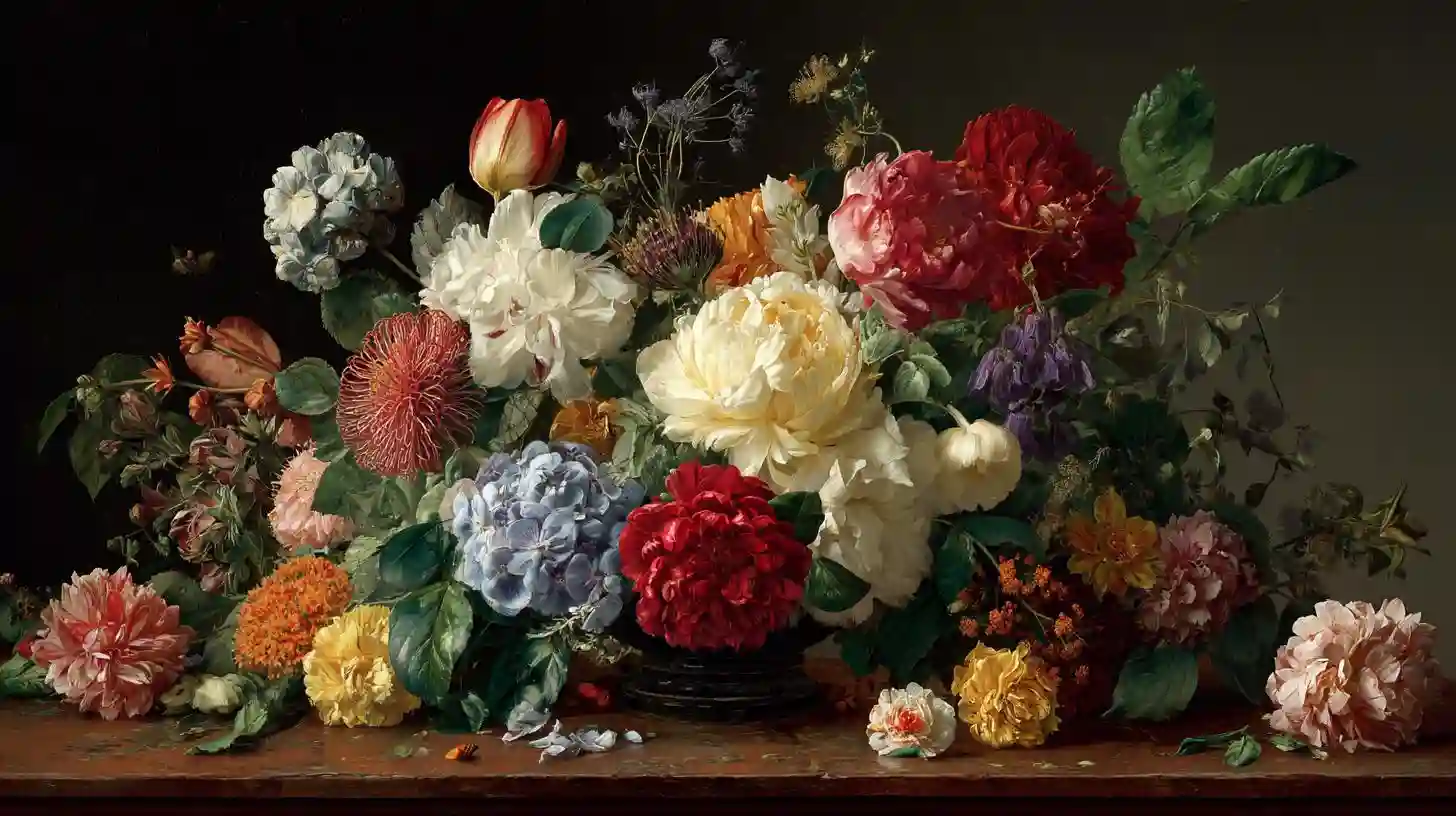
Flowers have been a symbol of beauty, love, and transience throughout human history, and their depiction in art and literature reflects their significance in the human experience. From ancient civilizations to modern times, bouquets and individual flowers have served as powerful metaphors, symbols of emotion, and elements of aesthetic pleasure. In the world of art, flowers are often used to represent various themes such as life, death, renewal, and even social status. In Renaissance still life paintings, bouquets were carefully arranged to symbolize the fleeting nature of life and the inevitability of death, drawing upon the concept of memento mori. Artists used flowers not only to showcase their technical skill in capturing color and texture but also to engage viewers in a deeper reflection on mortality and the passage of time.
In literature, flowers have been imbued with symbolism from the earliest works. In Greek mythology, flowers were often seen as gifts from the gods, representing both divine beauty and the fragility of existence. The writings of poets throughout history frequently feature flowers as metaphors for love and longing. Shakespeare, for example, used flowers to convey the emotions of his characters, with his play "Hamlet" featuring Ophelia’s famous line, “There’s rosemary, that’s for remembrance; pray, love, remember.” Such references show how flowers can encapsulate the emotions of remembrance, love, and sorrow all at once. In the 19th century, the language of flowers, or floriography, became especially popular in Victorian society. People would send bouquets with specific flowers to communicate feelings that could not be expressed through words alone. A red rose symbolized passionate love, while a white lily represented purity and virtue.
Throughout history, bouquets have been used as gifts, rituals, and tokens of affection. They have evolved in meaning, becoming more than just decorative arrangements. Flowers in art and literature allow humanity to reflect on its most profound feelings and experiences, from joy and celebration to grief and loss. They have remained ever-present in creative expression, offering a universal language through which emotions can be conveyed across cultures and time periods. Whether as a subject in a painting, a plot device in a novel, or a personal gesture of affection, flowers have the power to transcend the boundaries of language, speaking directly to the heart of human emotion.