 International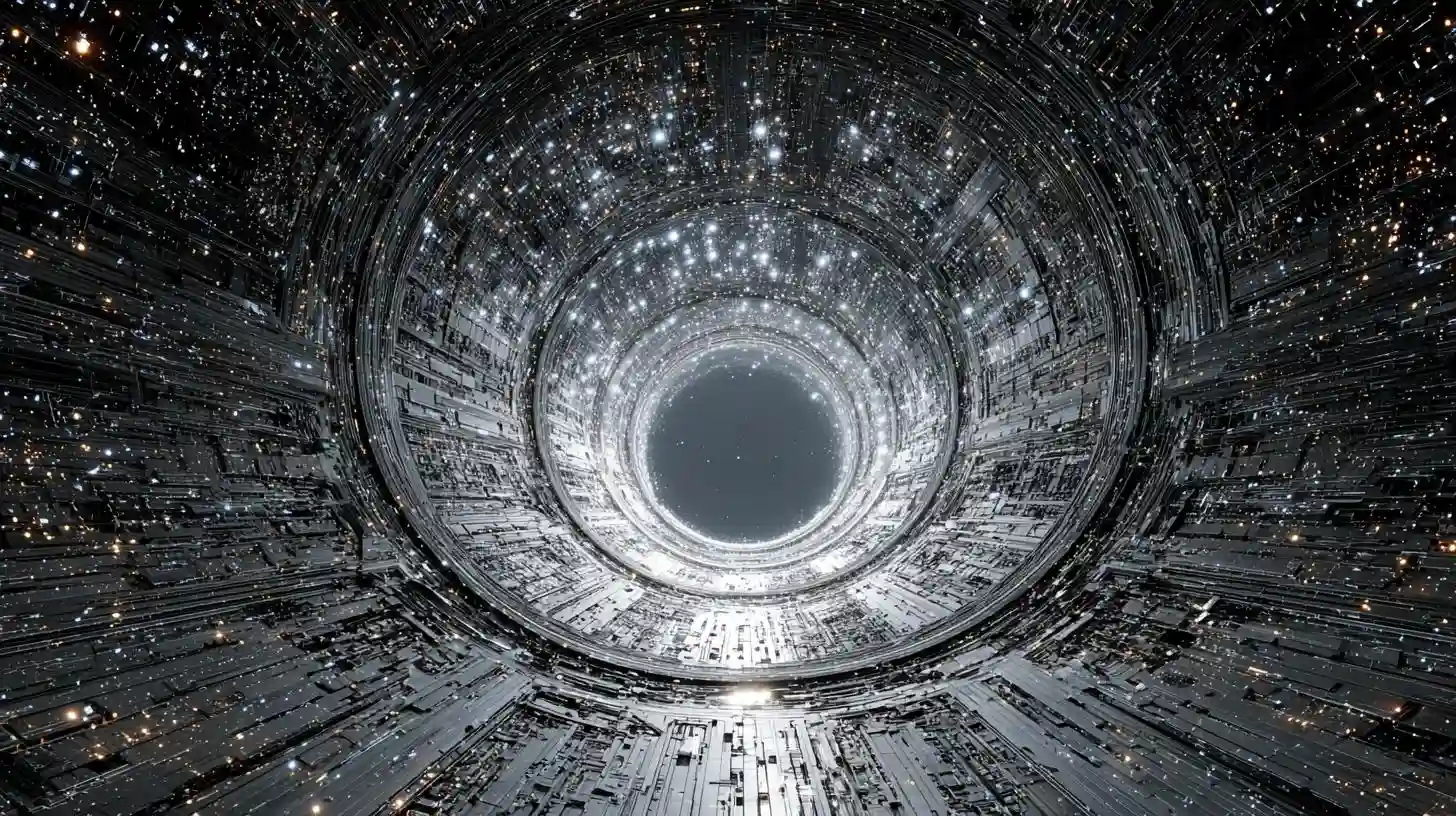
Wormhole theory has fascinated scientists and science fiction enthusiasts for decades, offering a potential pathway to unravel the mysteries of interstellar travel. While the idea remains largely theoretical, it challenges our current understanding of space and time, proposing that distant points in the universe could be connected through shortcuts known as wormholes. These hypothetical structures are often referred to as "Einstein-Rosen bridges," named after the physicists Albert Einstein and Nathan Rosen, who first described them in the context of general relativity. Essentially, a wormhole acts as a tunnel, bridging two separate points in space-time, making it possible to travel vast distances in what would otherwise take thousands or millions of years.
At the core of wormhole theory is the concept of spacetime, the four-dimensional continuum that combines three dimensions of space and one of time. According to general relativity, mass and energy can warp spacetime, causing objects to move in curved paths. This curvature is what we experience as gravity. Wormholes would, in theory, represent regions where spacetime is bent in such a way that two distant points in the universe are connected. This connection would allow for faster-than-light travel, theoretically enabling interstellar journeys that would otherwise be impossible due to the vast distances between stars.
The idea of wormholes arises from the solutions to Einstein's equations of general relativity. When these equations are applied to certain conditions, they suggest that space-time could be shaped in ways that allow for the creation of tunnels or shortcuts. However, creating or stabilizing a wormhole for practical use presents enormous challenges. One of the most significant hurdles is that wormholes, if they exist, would likely be extremely unstable. The nature of spacetime would cause these tunnels to collapse almost instantaneously unless something could prevent this from happening. To stabilize a wormhole, scientists theorize that exotic matter, a form of matter with negative energy density, might be required. This hypothetical substance could counteract the gravitational forces that would otherwise collapse the wormhole.
Another major challenge in wormhole theory is the potential violation of causality, which is the principle that cause must precede effect. If wormholes allow for faster-than-light travel, they could potentially lead to time travel, where a traveler could arrive at their destination before they left. This raises the possibility of paradoxes, such as the famous "grandfather paradox," where a traveler could potentially prevent their own existence by altering events in the past. To avoid such issues, some theoretical physicists propose that wormholes might be limited in ways that prevent such paradoxes from occurring. For instance, the "many-worlds" interpretation of quantum mechanics suggests that changes made in the past could result in the creation of alternate realities, rather than affecting the original timeline.
Despite the theoretical nature of wormholes, their exploration could revolutionize space travel. One of the key implications of wormhole theory is the possibility of interstellar exploration. If wormholes could be stabilized and navigated, humanity could potentially travel to other star systems in a matter of days or weeks, rather than spending centuries or longer in transit. This would allow for the exploration of distant exoplanets, some of which may harbor the conditions necessary for life. The search for habitable planets beyond our solar system is one of the primary goals of modern astronomy, and wormholes could provide a means of achieving this in a fraction of the time it would take using current space travel technology.
The concept of using wormholes for interstellar travel has also sparked discussions about the future of space colonization. As Earth faces the challenges of overpopulation, resource depletion, and environmental degradation, humanity may eventually look to the stars for a new home. The ability to traverse vast distances through wormholes would dramatically increase the feasibility of colonizing distant planets. Establishing colonies on exoplanets could become a reality, ensuring the survival of humanity beyond Earth. This scenario may sound like science fiction today, but the continued advancement of theoretical physics and space exploration could one day make it a tangible possibility.
While wormhole theory remains speculative, it continues to captivate the imagination of scientists, engineers, and space enthusiasts around the world. It represents a frontier of science that challenges our current understanding of the universe and the laws of physics. The potential applications of wormholes, from faster-than-light travel to time travel, offer a glimpse into a future where humanity can explore the cosmos in ways previously only dreamed of. Whether or not wormholes are a fundamental part of the universe, the quest to understand them is likely to lead to groundbreaking discoveries that could reshape our understanding of space, time, and the very fabric of reality.