 International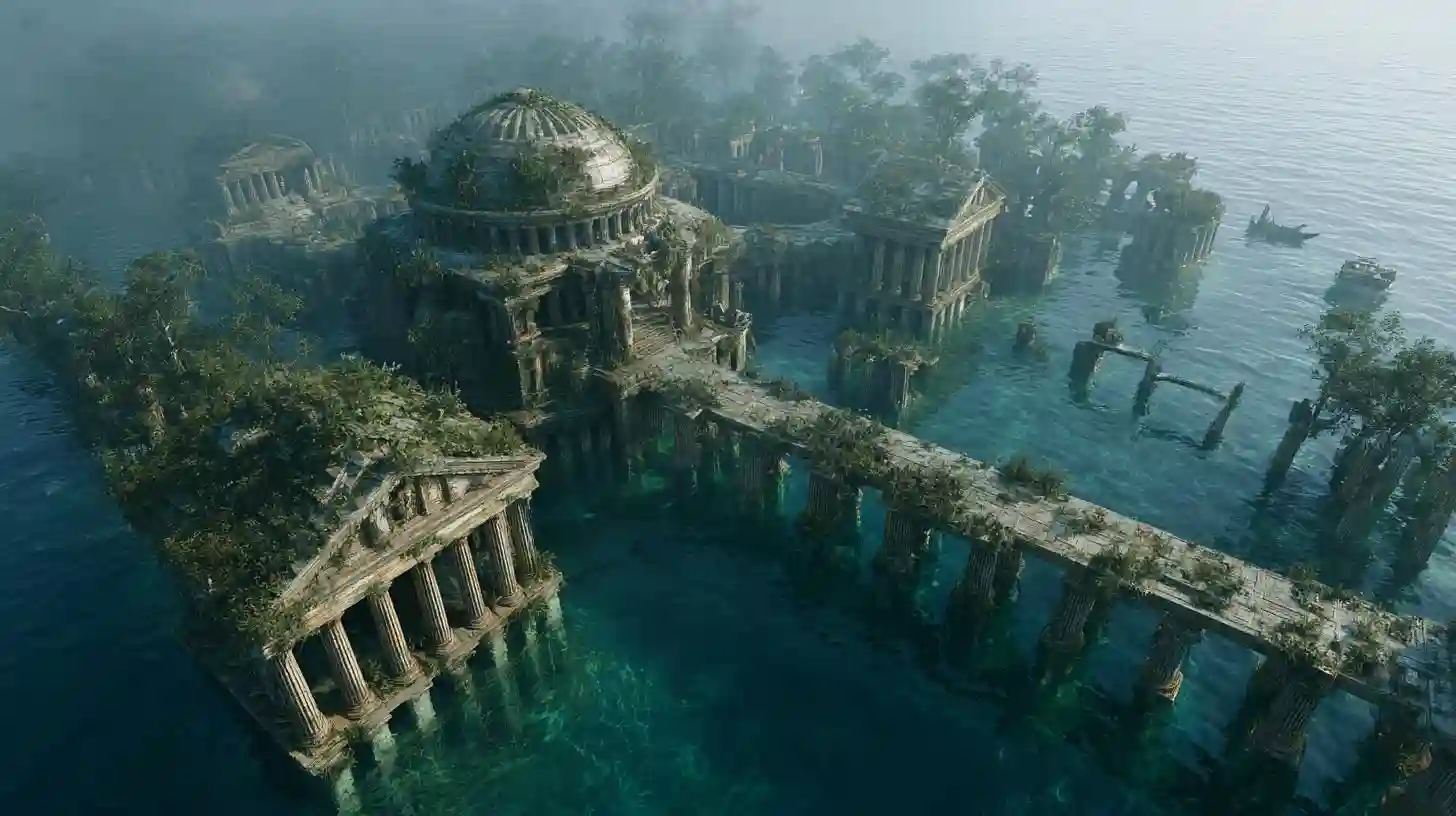
Beneath the surface of the world’s oceans lies a realm of forgotten civilizations and mysteries waiting to be uncovered. Over the centuries, rising sea levels, natural disasters, and human expansion have submerged entire cities, leaving behind only the faintest traces of their existence. These sunken cities are not just lost to time but also hold untold stories, offering a glimpse into ancient cultures and their innovations. While some of these underwater cities are well-known, there are many others that remain relatively obscure, their stories waiting to be told.
One of the most intriguing submerged cities is the ancient Greek city of Atlantis. Though it has been the subject of myths and speculation for centuries, there are numerous theories suggesting that Atlantis may have existed in real life. Some believe it was located in the Mediterranean Sea, possibly near the island of Santorini, which was devastated by a volcanic eruption around the fifteenth century BCE. While no definitive evidence has been found, the legend of Atlantis continues to captivate the imaginations of historians and adventurers alike.
Another fascinating underwater site is the city of Thonis-Heracleion, which lies off the coast of Egypt in the Mediterranean Sea. This ancient city, which was once a major trading hub and religious center, was rediscovered in the late twentieth century after being submerged for over a millennium. Excavations have uncovered statues, temples, and even entire buildings, providing invaluable insights into Egypt’s past. The city's demise remains a mystery, with theories ranging from rising sea levels to seismic activity that may have caused the city to sink.
In the Caribbean, the city of Port Royal, Jamaica, is a well-known example of an underwater city that was once a bustling pirate haven. During the late seventeenth century, Port Royal was infamous for its wealth and lawlessness. However, in 1692, a massive earthquake struck the region, and much of the city sank into the sea. Archaeologists have been studying the ruins for decades, uncovering coins, artifacts, and even the remains of wooden ships, giving us a glimpse into the life of pirates and sailors during the Golden Age of Piracy.
On the coast of India, the submerged city of Dvaraka has long been the subject of mythological tales, particularly in Hindu texts. According to legend, this ancient city was the home of the god Krishna and was said to be a magnificent metropolis before it was swallowed by the sea. In recent years, underwater archaeology has revealed structures and relics off the coast of Gujarat, lending some credence to the idea that Dvaraka may have had a real, historical counterpart.
The submerged ruins of the Mayan city of Tulum in Mexico offer a rare glimpse into the ancient Maya civilization. Though the city was not fully submerged, parts of it, including temples and buildings, lie partially beneath the waves. The Maya were known for their advanced understanding of astronomy and architecture, and Tulum stands as a testament to their ability to construct cities on cliffs overlooking the Caribbean Sea. The fact that parts of the city are now underwater adds an air of mystery to the site.
The ancient city of Yonaguni, located off the coast of Japan, is another site that has captured the imaginations of many. This underwater structure, often referred to as the "Yonaguni Monument," consists of large, man-made-looking steps and terraces carved into the rock, which some believe to be evidence of an ancient civilization that existed more than ten thousand years ago. Others argue that the formation is a natural geological structure, but regardless of its origins, it remains one of the most fascinating underwater anomalies in the world.
Off the coast of the Chinese province of Fujian lies the sunken city of Nan'ao. This underwater city, which dates back over a thousand years, was once a thriving port and cultural center. It is believed to have been abandoned due to natural disasters or warfare, and its ruins were rediscovered in the late twentieth century. Researchers have found streets, walls, and buildings, as well as intricate pottery and other artifacts, shedding light on the life of ancient Chinese seafarers.
The underwater city of Dwarka, located off the western coast of India, is another site that has long been steeped in legend. According to ancient texts, Dwarka was a grand city built by Lord Krishna, and it was said to have sunk into the ocean after Krishna’s death. In recent years, underwater expeditions have uncovered ruins that suggest the presence of a well-planned city, with large walls and roads, which may offer evidence of the existence of the mythical city.
In the Mediterranean Sea, the ancient city of Pavlopetri off the coast of Greece is considered to be one of the oldest submerged cities in the world. Dating back to the third millennium BCE, Pavlopetri was a thriving settlement before it was submerged by rising sea levels. Archaeologists have uncovered well-preserved structures, streets, and even tombs, allowing for an in-depth study of the city’s layout and its role in ancient trade networks.
The submerged city of Shicheng, located in China’s Qiandao Lake, is often referred to as the "Lion City." It was deliberately submerged in the 1950s when the local government constructed a dam to create a reservoir. The city, which dates back over 1,300 years, was known for its exquisite stone carvings and well-preserved architecture. Today, the city lies beneath the lake’s clear waters, and divers and researchers continue to study the ruins, uncovering the rich history of this ancient Chinese civilization.
These underwater cities represent just a small fraction of the many lost worlds beneath the waves. Each site tells a unique story of human innovation, culture, and resilience, preserved for centuries by the vast oceans that have kept them hidden. As technology advances and more explorations are conducted, it is likely that even more submerged cities will be discovered, offering new insights into the history of civilizations that once flourished but now lie forgotten beneath the sea.